
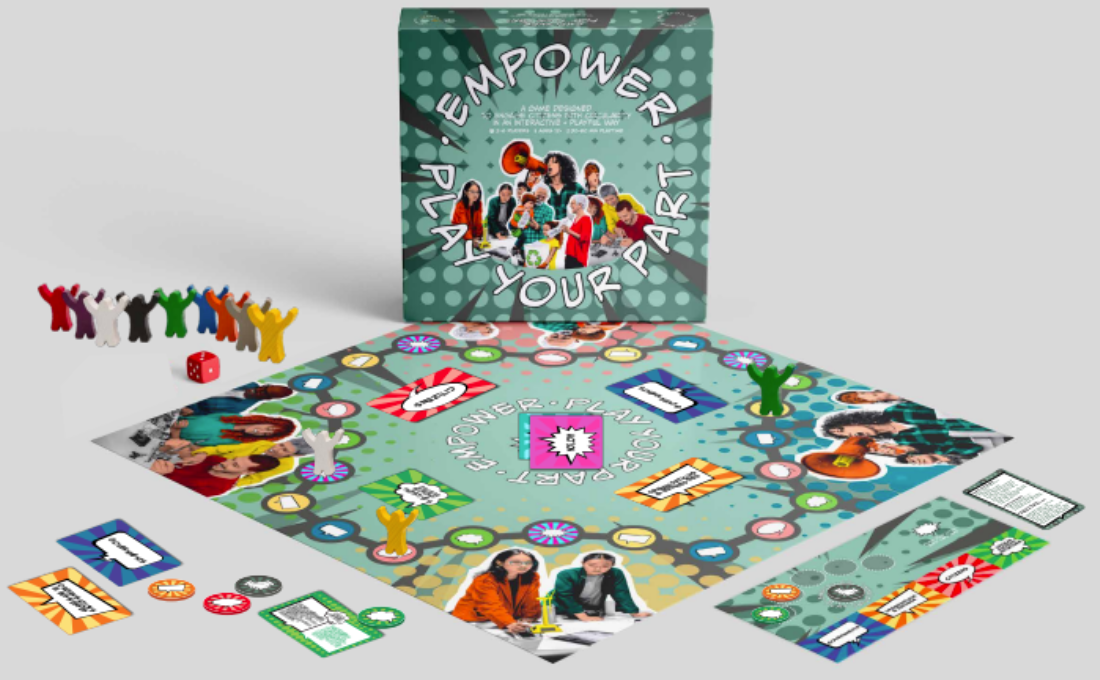
To achieve a circular economy, we need actions by all societal actors, including governments, businesses, and citizens. Citizens can contribute to a circular economy not only by engaging in circular consumption, but also by engaging in circular citizenship behaviours. These are aimed at urging governments, businesses, and other citizens to take actions that facilitate and encourage systemic change towards a circular economy. Thereby, they could allow for far-reaching transformations and make circular consumption more attractive and feasible.
The environmental psychology group at the University of Groningen investigates which factors encourage engagement in circular citizenship behaviours and how engagement might be increased. Based on this research, Brian Wagner, Isabel Pacheco, Ellen van der Werff, and Linda Steg have developed a game that encourages players to reflect on their circular citizenship behaviours and commit to more engagement, which could encourage them to more often urge others to act, thereby promoting systemic change. The game aims to strengthen factors promoting circular citizenship behaviours identified in their studies, such as awareness of what they can do, how to overcome barriers to engage, or what impact such behaviours might have. For example, players learn about ways others engage in circular behaviours, which could increase their own perceived ability to act, which has been shown to relate to more (circular) behaviour.
By strengthening motivators and reducing barriers to engagement, the game empowers people to urge others to contribute to a circular economy and contribute to meaningful systemic change towards a more circular economy.
If you are interested in learning more, you can contact us at [email protected].
If you want to read more about the research this game is based on, you can have a look here:
- Geiger, N., Swim, J. K., & Fraser, J. (2017). Creating a climate for change: Interventions, efficacy and public discussion about climate change. Journal of Environmental Psychology, 51, 104-116.
- Jones, M. S., & Niemiec, R. M. (2020). Social-psychological correlates of personal-sphere and diffusion behavior for wildscape gardening. Journal of Environmental Management, 276, 111271.
- Niemiec, R., Jones, M. S., Lischka, S., & Champine, V. (2021). Efficacy‐based and normative interventions for facilitating the diffusion of conservation behavior through social networks. Conservation Biology, 35(4), 1073-1085.
- Pacheco, I. M., Van der Werff, E., & Steg, L. (2025). Circular citizenship behaviours: How individuals can promote systemic change towards a circular economy. iScience, 28(7), 112906. https://doi.org/10.1016/j.isci.2025.112906
- Pacheco, I. M., Van Der Werff, E., & Steg, L. (2026). Circular citizenship behaviours to promote systemic change: Influences of values, beliefs, norms, and personal agency. Journal of Environmental Psychology, 110, 102890. https://doi.org/10.1016/j.jenvp.2025.102890
- Pacheco, I. M., van der Werff, E., & Steg, L. (2026). What drives citizen action to promote systemic change—Insights into circular citizenship behaviours from five European countries. Environmental Psychology Research, 1, e70018. https://doi.org/10.1002/epr2.70018
- Wagner, B., Van Der Werff, E., & Steg, L. (2025). Values at work: Understanding how individual and perceived organisational values relate to employees’ motivation and pro-environmental behaviour at work. Journal of Environmental Psychology, 103, 102547. https://doi.org/10.1016/j.jenvp.2025.102547
- Wagner, B. A., Van Der Werff, E., & Steg, L. (2026). Working values: Relationships between individual and organisational biospheric values, efficacy beliefs and pro-environmental behaviour at work. Journal of Organizational Effectiveness: People and Performance, 1–17. https://doi.org/10.1108/JOEPP-07-2025-0540