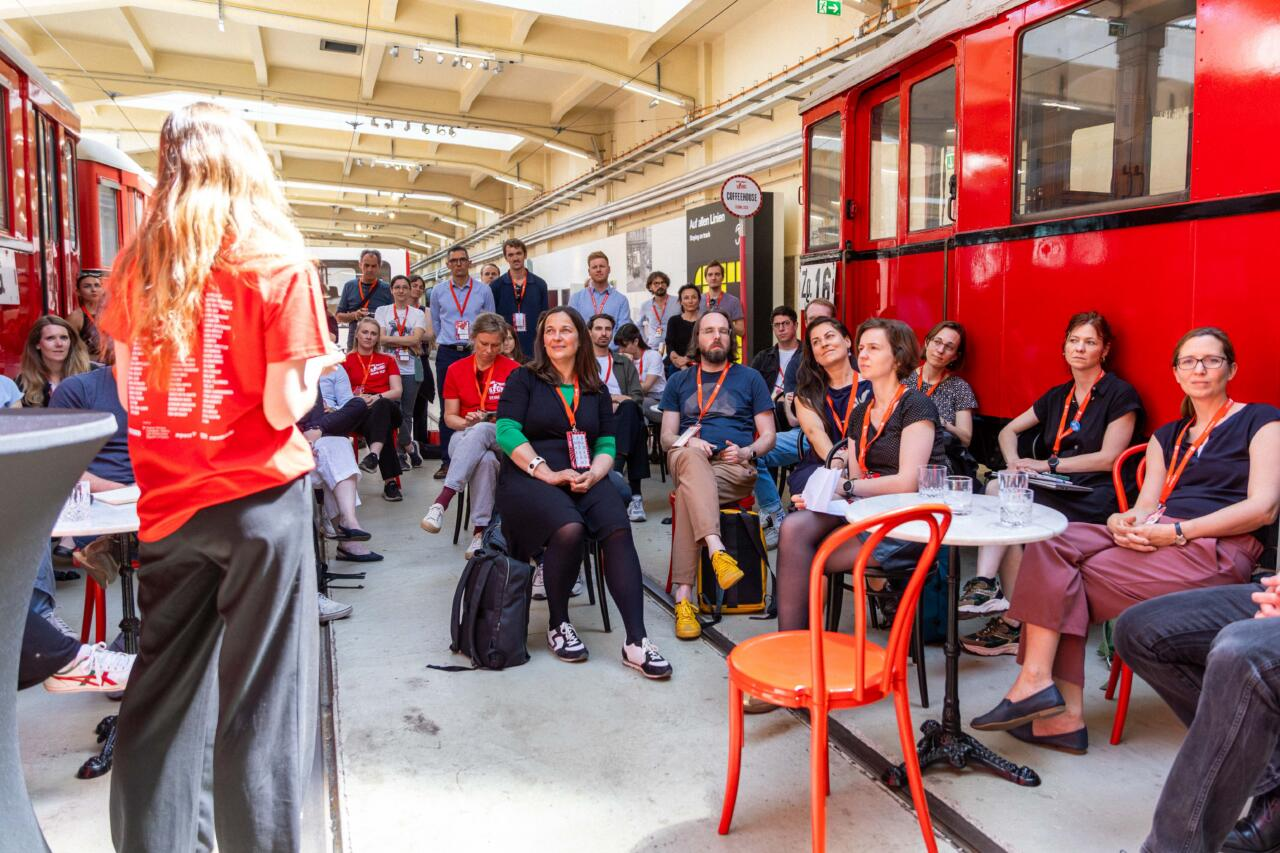
At the Shared Mobility Rocks 2026 conference in Vienna, LMU researchers Henrike Rau and Eoin Grealis from the CircEUlar project presented new findings on one of the most pressing questions in sustainable mobility: can shared automobility help people break their reliance on private car ownership? The session, Breaking the Car Habit, explored how behavioural change, practical mobility alternatives, and emerging evidence on “car shedding” can support a transition towards more circular and sustainable transport systems.
Analyzing data from 80 interviews and 5,651 responses to the Circular Consumption Survey carried out across five European countries, the research examined the availability, use, and potential of car-sharing services to satisfy existing needs. While 45% of respondents reported access to at least one form of car sharing, the frequency of usage was relatively low, with 72% of respondents using these car sharing offers only rarely (27%) or not at all (45%). Interestingly, community-based schemes showed higher levels of regular participation, suggesting that locally embedded approaches may hold greater potential for replacing private ownership.
The findings also highlight the complexity of reducing car ownership. Decisions to share or give up a car depend not only on service availability, but also on required flexibility, social norms, daily routines, and time pressures. Interview participants consistently emphasised that daily mobility choices are shaped by the realities of everyday life.
Importantly, the research suggests that the availability of car sharing services can both reduce and in some cases increase vehicle demand, depending on user context. While shared mobility may enable some households to shed cars or avoid future purchases, it also increases accessibility to car use for others. The broader impacts on travel behaviour and long-term automobility trends remain insufficiently understood.
As European motorisation rates continue to rise, the CircEUlar project’s work underscores the need for nuanced, evidence-based approaches to designing mobility systems that provide sufficient alternatives to private ownership, including shared mobility options that satisfy the daily mobility needs of different user groups.